
The Best Long-Lasting Nail Options for Work
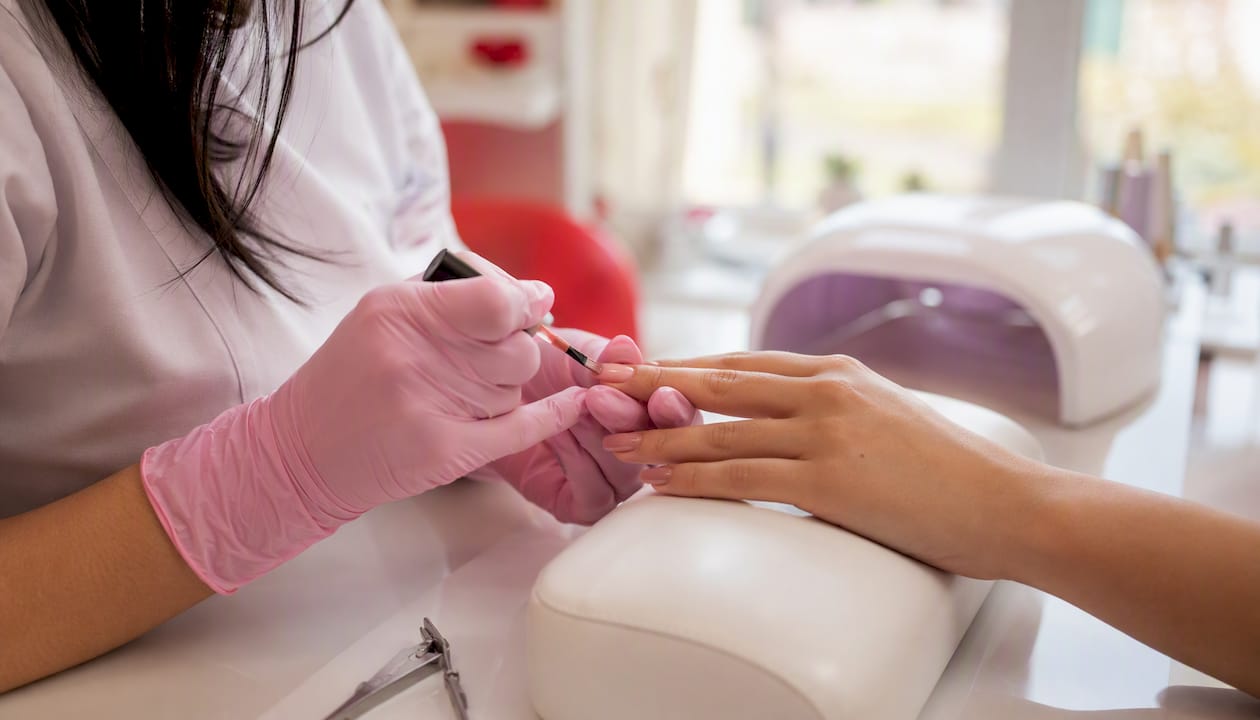
For most professionals, BIAB (Builder In A Bottle) or a properly cured gel polish manicure are the smartest starting points. Both hold up through a full work week, look polished without looking overdone, and come off without wrecking your nail plate when a licensed technician handles removal.
Client-facing roles (healthcare, sales, finance, hospitality): gel polish or BIAB in a neutral or milky shade, kept short to medium length. Clean, chip-free, and professional without demanding weekly upkeep.
Hands-on or heavy-wear roles (trades, food service, childcare, healthcare with frequent hand-washing): dip powder (SNS) or acrylic overlays for extra rigidity and longer wear between fills.
The real trade-off is durability versus nail health. Harder products last longer but require more careful removal. Softer soak-off gels are gentler but may lift sooner under heavy use. A quick consult with a licensed technician at a salon like TJ Nails in Bradenton helps match the right format to your nail condition and schedule before you commit.
Key Takeaways
BIAB and gel polish are the most practical long-lasting nail options for work, balancing durability, nail health, and a professional appearance across most office and client-facing roles.
Point | Details |
Best format for most professionals | BIAB or gel polish lasts 2–5 weeks and suits nearly every professional setting. |
Dip powder for heavy-wear roles | SNS dip powder holds up better under frequent hand-washing and physical demands. |
Daily cuticle oil is non-negotiable | Consistent cuticle oil use prevents lifting and extends wear between salon visits. |
Professional removal prevents damage | Peeling or prying product off thins the nail plate; always soak off or see a technician. |
Bradentonnails for local guidance | TJ Nails in Bradenton offers gel, BIAB, SNS, and acrylic with licensed technician consultations. |
Table of Contents
What are the main long-lasting nail formats for work?
Not every “long-lasting” service is built the same. Here is a quick breakdown of what each format actually is, how long it realistically holds, and where it fits a professional routine. According to NailAtlas, technician prep and client hand use typically matter more than product choice for real-world longevity, which is worth keeping in mind as you read the ranges below.
Service | Typical Wear | Damage Risk | Work-Appropriate Look | Removal |
Gel polish (LED/UV cured) | 2–3 weeks | Low to moderate | Excellent; any length or color | Soak-off; moderate |
CND Shellac | 2–3 weeks | Low | Excellent; natural finish | Soak-off; gentle |
BIAB / hard gel overlay | lasts several weeks | Low when done correctly | Excellent; structured, natural | Soak-off or e-file; professional preferred. |
SNS / dip powder | lasts several weeks | Low to moderate | Good; slightly thicker look | Acetone soak; moderate |
Acrylic (EMA-based) | 2–4 weeks (with fills) | Moderate | Good; strong, any length | Acetone or drill; professional preferred |
Salon press-ons | 1–2 weeks | Very low | Good for short-term needs | Peel or soak; easy |
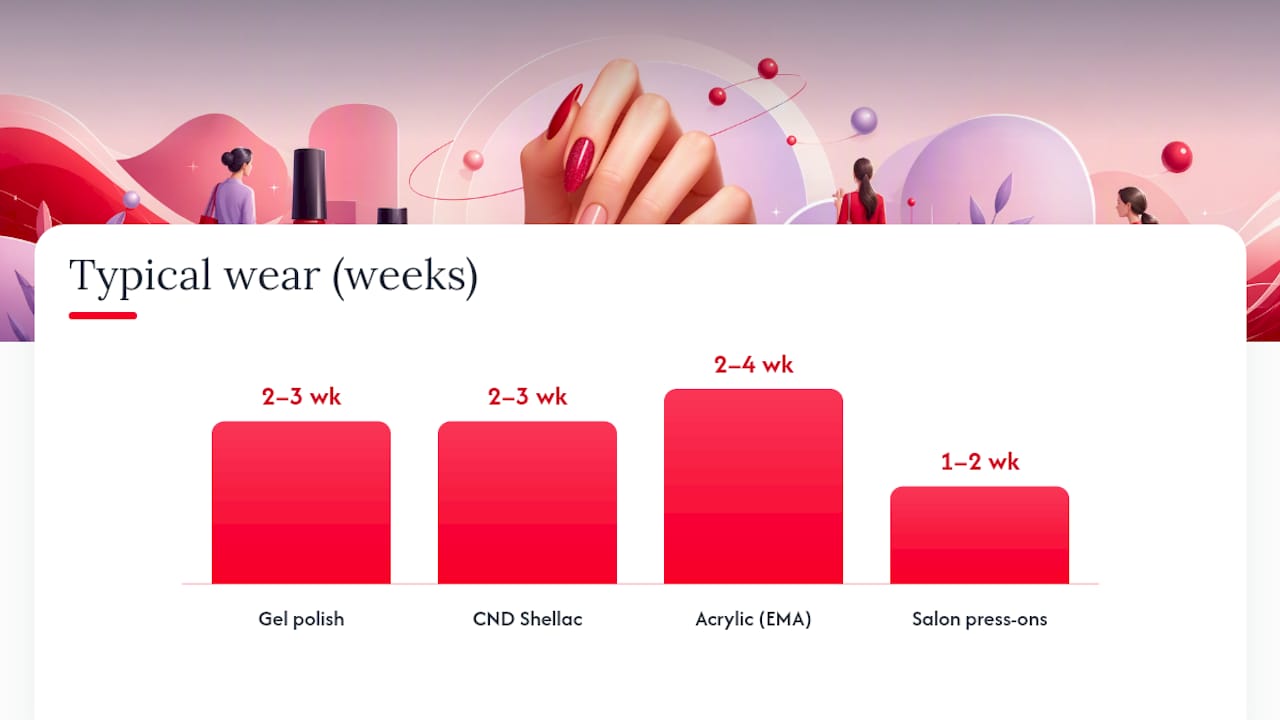
Southern Living’s manicure roundup notes that gel and acrylic consistently rank among the longest-lasting formats, with gel offering better chip resistance and acrylic providing more strength for extreme length. Salon press-ons have improved significantly and work well for short-term professional needs, though they are not a substitute for a structured overlay when you need four-plus weeks of wear. You can also explore a broader overview of nail enhancement options to see how these formats compare side by side.
What “work-appropriate” actually means for nails
Professional nail standards are less about a strict rulebook and more about not distracting from the work itself. A few concrete guidelines make this easier to apply.
Length: The widely cited professional standard sits at roughly 2–4 mm beyond the fingertip, per Mirellé Inspo’s work-nail guide. That is short enough to type comfortably, avoid snagging on gloves, and maintain without constant upkeep. Anything past the second knuckle crease when viewed from the palm side tends to read as fashion-forward rather than office-ready.
Shape: Rounded, oval, or soft-square edges are the safest choices for professional settings. They look intentional, reduce the risk of snagging, and hold product better at the free edge than extreme stiletto or coffin shapes. Squoval (square with softened corners) is a practical default that works across most industries.
Color and finish:
Nudes, milky whites, sheer pinks, and soft beiges read professional in virtually every workplace.
A classic red or deep burgundy is appropriate in most client-facing roles when kept short and chip-free.
Matte finishes can look sharp, though they show wear faster than a glossy topcoat.
A single accent nail with a subtle design is generally acceptable in creative or hospitality roles; avoid it in conservative environments like law or finance.
Glitter and bold nail art are best saved for personal time unless your workplace culture explicitly welcomes them.
Nail hygiene is part of the professional picture too. Clean cuticles and a chip-free surface signal attention to detail in the same way a pressed shirt does. The role of nail hygiene at work covers this connection in more depth.
Which long-lasting services are gentlest on your natural nail?
Gentleness comes down to two things: the product’s removal method and how the technician preps the nail plate. Soak-off gels, BIAB/builder gel overlays, and properly applied soft-gel tip systems are generally gentler than standard acrylic when removal is handled correctly, according to NailAtlas. The key phrase is “handled correctly.” A rushed soak-off that turns into aggressive filing does more damage than a well-executed acrylic removal.
What a careful technician does differently:
Minimal filing on the natural nail plate before application (dehydration, not abrasion)
Full soak-off removal rather than peeling or prying
Proper cuticle clearance to prevent product touching skin, which reduces lifting and sensitization
Avoiding over-buffing between fills, which thins the plate over time
Pro Tip: If you plan to wear gel regularly, ask your technician for a HEMA-free or HEMA-reduced formula. HEMA (hydroxyethyl methacrylate) is the most common sensitizer in gel products. Repeated exposure can trigger a contact allergy that eventually makes you reactive to all gel products. Patch-testing is worth requesting if you have had prior redness or itching after a gel service.
For nails already showing thinning or peeling, damaged nail treatment options at a professional salon can help restore plate thickness before you commit to a new enhancement. The DTK Nail Supply breakdown also notes that EMA-based acrylics are the safer industry standard over MMA, which some discount salons still use.
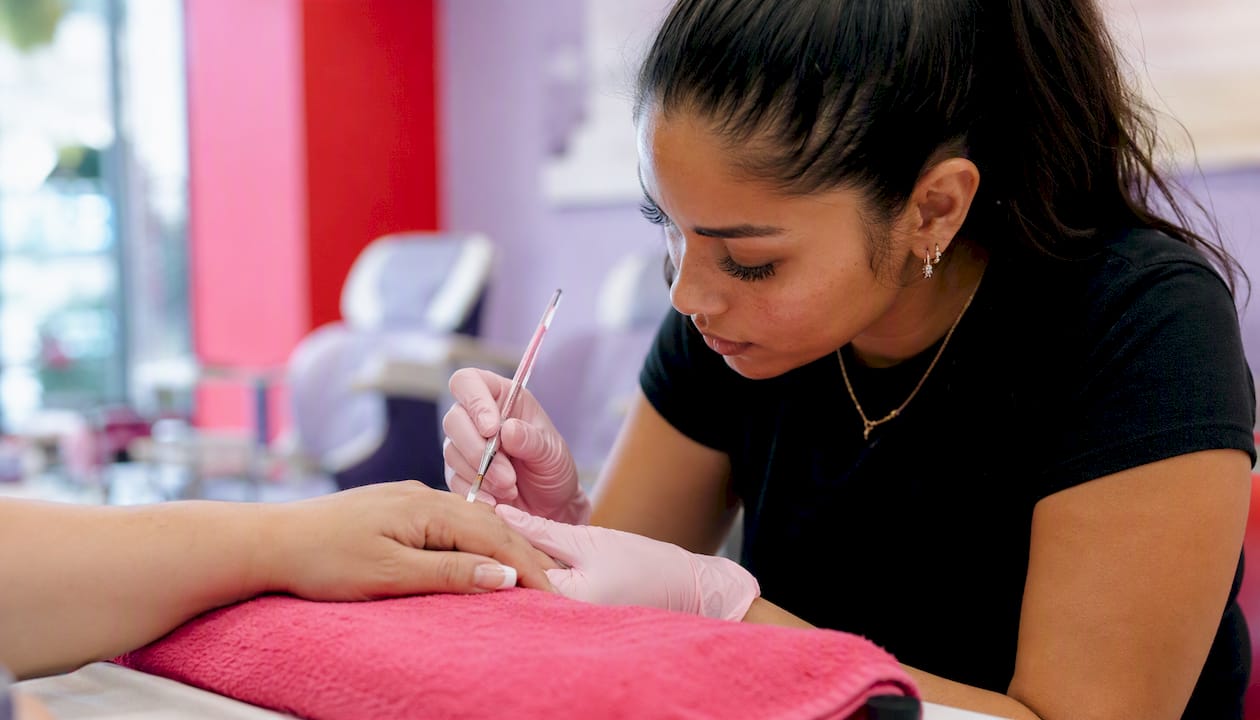
Daily and weekly maintenance that actually extends your manicure
A great set from the salon can fall apart in a week if aftercare is neglected. The good news is that the routine is short.
Apply cuticle oil daily. Morning or before bed, one drop per nail. Consistent cuticle oil use prevents the micro-cracks that let moisture under the product and cause lifting. This single habit has more impact on wear time than most people expect.
Wear gloves for wet tasks. Dishes, cleaning, and prolonged water exposure are the fastest ways to break the seal at the free edge. Keep a pair of rubber gloves near the sink.
Avoid using your nails as tools. Opening packages, scraping labels, and prying lids all stress the free edge and cause chips or cracks at the tip.
Apply a thin layer of chip-resistant topcoat mid-week. One pass over the free edge and the surface of each nail adds a meaningful layer of protection. A bonding base coat at your next appointment helps adhesion last longer too.
Do not pick or peel. Peeling product off takes layers of the natural nail plate with it. If a nail lifts, leave it alone and book a repair.
Pro Tip: A small chip at the free edge can be hidden with a single drop of matching gel or dip powder and a UV lamp touch-up at home. If the lift is at the cuticle or covers more than a third of the nail, rebook rather than repair. Lifting at the base is a sign of prep failure or moisture intrusion, and patching it prolongs the problem.
The nail salon aftercare guide from Bradentonnails covers these steps in detail, and the Mayo Clinic’s nail care advice reinforces keeping nails dry, moisturizing cuticles, and seeing a healthcare professional for any persistent nail changes.
How long each service lasts and what to budget in the U.S.
Realistic wear windows and cost ranges help you plan fills before a chip becomes a problem at work.
DTK Nail Supply puts the standard fill schedule at 2–3 weeks for most extension systems, which aligns with what most U.S. salons recommend. BIAB and dip powder can stretch to four weeks for clients with slower nail growth and careful hand habits, making them cost-effective over a full month.
When budgeting, think in monthly terms rather than per-visit. A gel polish at $45 every two weeks runs about $90 per month. A BIAB set at $70 every four weeks costs less and holds longer. The manicure scheduling guide at Bradentonnails breaks down timing by service type for anyone planning a recurring appointment schedule.
Safe removal: what to do and what to avoid
Removal is where most nail damage actually happens, and most of it is avoidable.
Safe removal by service type:
Gel polish and Shellac: Soak a cotton pad in acetone, place it on the nail, wrap with foil for 10–15 minutes, then gently slide the product off. Never scrape hard.
BIAB / hard gel overlay: Requires an e-file or careful hand-filing to break the surface seal, followed by an acetone soak. Professional removal is strongly recommended.
Dip powder (SNS): Acetone soak for 10–15 minutes, then gentle buffing. The product dissolves more readily than hard gel.
Acrylic: Acetone soak or professional drill removal. Safe acrylic removal techniques from Bradentonnails walk through the process step by step.
What to avoid:
Peeling or prying product off. This removes layers of the nail plate and causes long-term thinning.
Aggressive home filing without proper technique. You can file through the natural nail before you realize it.
Skipping the soak and going straight to a metal pusher.
When to see a professional or dermatologist:
Persistent redness, swelling, or pain around the nail fold after a service
Nail-bed separation (onycholysis) or unusual discoloration that does not resolve
Any sign of infection (pus, warmth, spreading redness)
The Mayo Clinic recommends consulting a healthcare professional for any nail changes that persist or worsen. For discoloration specifically, a podiatry overview of nail discoloration causes can help distinguish cosmetic staining from a condition that needs clinical attention.
How to choose the right service for your job and schedule
Run through these questions before you book:
How often do you wash your hands? Frequent hand-washing (healthcare, food service) favors harder products like dip or acrylic that resist moisture intrusion better than standard gel.
What length and shape fits your role? Short to medium, rounded or soft-square for most professional settings.
Do you have any allergy history? Prior redness or itching after gel services suggests HEMA sensitivity. Ask for HEMA-free formulas or switch to dip powder.
How often can you realistically get to the salon? Every two weeks: gel polish. Every three to four weeks: BIAB or dip. Longer gaps: acrylic with fills or BIAB.
Questions to ask your technician at booking:
What prep method do you use (dehydrator, primer, bond)?
Do you offer HEMA-free or low-HEMA gel options?
How do you remove this service when it’s time?
What product brands do you carry for overlays?
Red flags at the salon:
Promises that a product will “never lift” or “peel off cleanly” without soaking
Aggressive bulk filing on the natural nail before application
No visible sterilization of metal tools or single-use files
No license displayed or visible
Trust signals: clean workstations, autoclaved metal tools, single-use files, and a technician who asks about your nail history before starting. Beauty tool hygiene is a baseline expectation at any reputable salon, not an upgrade.
What TJ Nails recommends for work-ready nails
For most professional clients, TJ Nails recommends starting with a BIAB or hard gel overlay for its balance of structure, longevity, and gentle removal. Gel polish is the go-to for clients who prefer a thinner, more natural feel and can commit to a two-to-three-week return visit. For clients in hands-on roles or those who need maximum durability between appointments, SNS dip powder is the practical choice.
Services available at TJ Nails that match these recommendations:
Gel manicures (including Shellac-style cured gel)
Acrylic and gel nail enhancements
SNS dip powder nails
Nail art and design for accent nails
Book online at TJ Nails in Bradenton or call to discuss which service fits your schedule and nail condition before your first appointment.
What technicians actually see with working clients
The most common complaint from professional clients is lifting at the cuticle within the first week. Nine times out of ten, it traces back to one of two things: product touching the skin at the sidewalls, or skipping cuticle oil in the days after the appointment. Neither is a product failure. Both are fixable.
Two patterns that come up repeatedly: a client-facing professional who switched from gel polish to BIAB found she could stretch her appointments from every two weeks to every four, with no visible wear difference at week three. A hands-on client in a healthcare role who had tried gel twice and experienced lifting within days switched to dip powder and has held a clean manicure through a full month of frequent hand-washing. The format matters, but matching it to your actual daily hand use matters more.
If your schedule only allows one salon visit per month, build your service choice around that constraint first, then adjust for aesthetics.
Your next step toward a work-ready manicure at TJ Nails
TJ Nails offers professional nail services in Bradenton, FL, with licensed technicians who assess your nail condition before recommending a service. Whether you are starting fresh or recovering from a previous enhancement, the team matches the format to your schedule and nail health rather than defaulting to one product for everyone.
Services include gel manicures, BIAB overlays, SNS dip powder, acrylic enhancements, and nail art, all performed in a clean, licensed environment. Professional removal is available for clients transitioning between formats. Online booking is open seven days a week, including Sundays. Book your appointment online or call TJ Nails to ask about a nail consultation before your first visit.
Sources
Recommended
Comments