
Damaged Nails Treatment Salon Options That Work
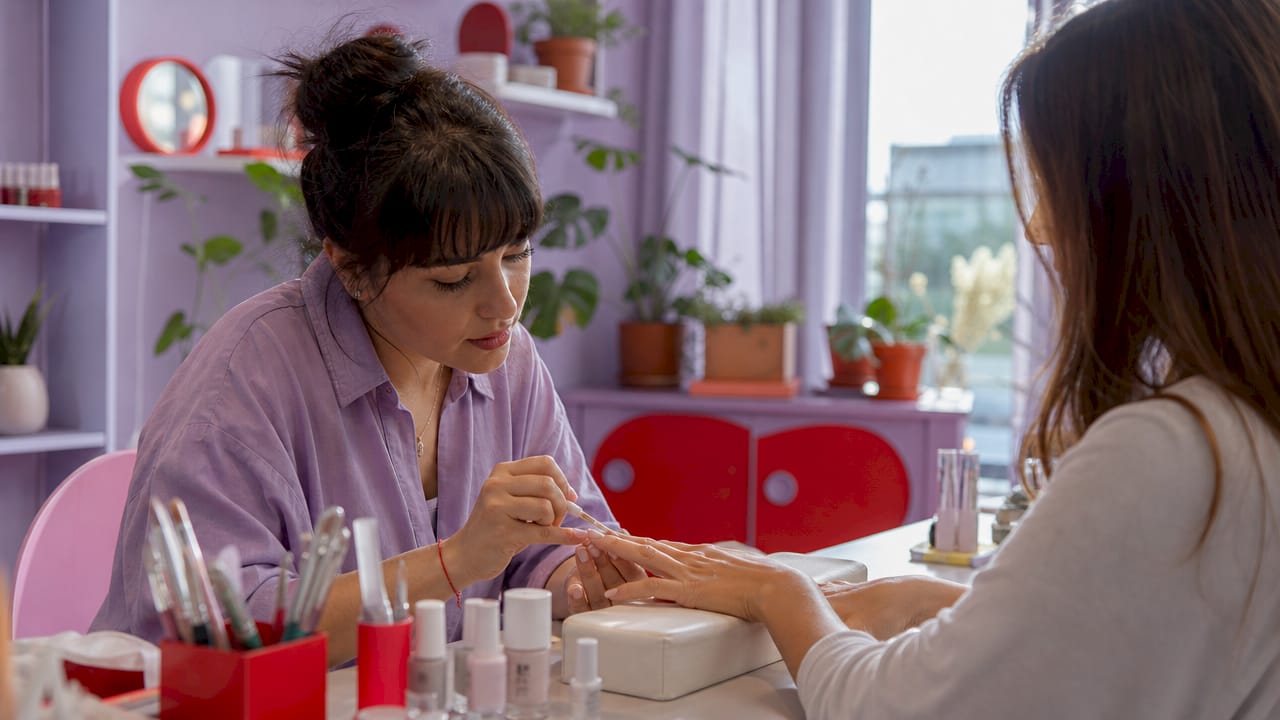
Damaged nails are defined as nail plates that have been structurally weakened, thinned, or split due to aggressive enhancement removal, chemical exposure, or physical trauma. The good news: damaged nails treatment salon options have advanced well beyond a simple buff and polish. Specialized services like BIAB overlays, silk wrap repairs, and medical-grade restorations such as KeryFlex now give nail technicians real tools to support recovery. The right treatment depends on damage severity, and choosing the wrong salon or the wrong method can set your nails back by months. Recovery takes patience, but with professional guidance, most nails return to full health within three to six months.
What professional salon treatments are available for damaged nails?
Nail restoration services fall into three tiers based on damage severity: minor cosmetic repair, protective overlay treatments, and medical-grade restoration. Each tier serves a different condition, and matching the treatment to the damage level is what separates a good outcome from a frustrating one.
Minor repairs address chips, splits, and small cracks. A skilled technician can handle these in a single visit. Minor nail repairs using silk wraps, gel reinforcement, or dip powder overlays typically take about 15 minutes per nail and cost around $6 per nail. That speed and affordability makes minor repair one of the most accessible nail repair salon treatments available.
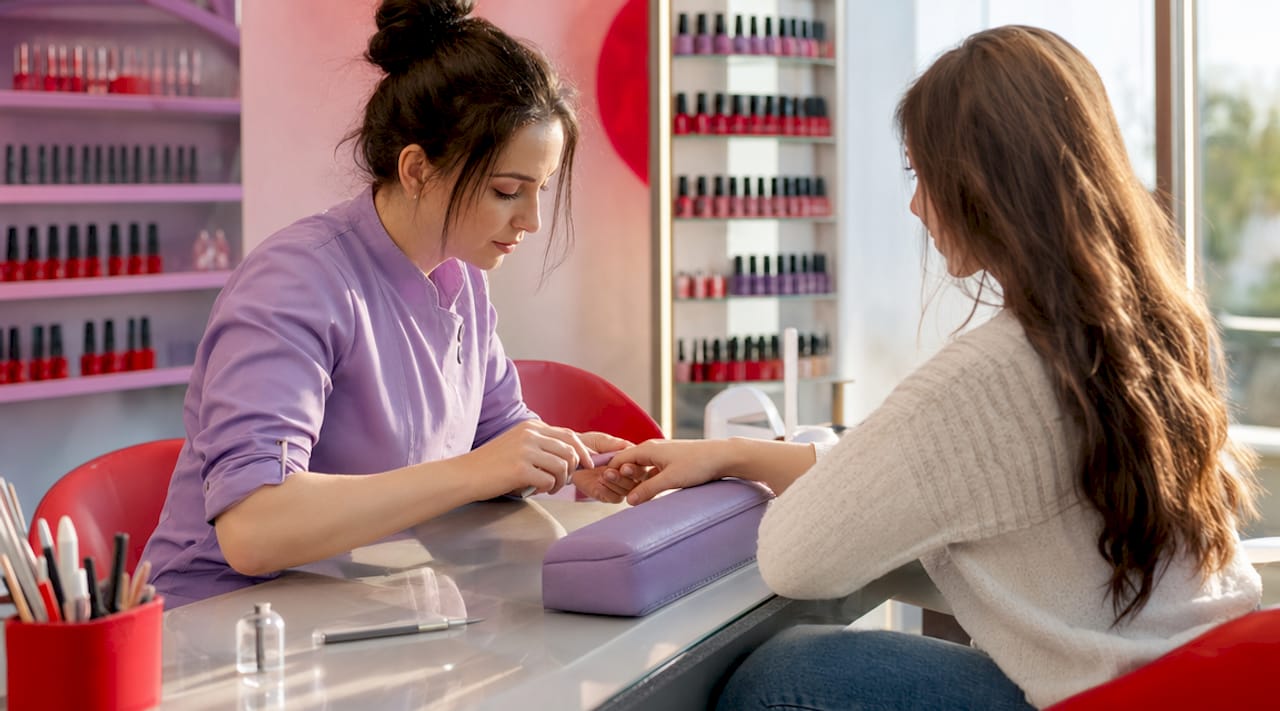
Protective overlays are the go-to for nails damaged by acrylic or gel removal. BIAB, which stands for Builder In A Bottle, is a soak-off gel applied directly over the natural nail. BIAB overlays protect damaged nails during regrowth by shielding the plate from mechanical stress and preventing breakage, and they require minimal prep with no buffing. This is critical because buffing a thin, compromised nail plate causes further thinning. BIAB lets the nail grow out underneath while staying protected.
Medical-grade restoration is reserved for severe cases, particularly damaged toenails. KeryFlex is a medical-grade resin applied by podiatrists to remodel nails damaged by trauma or fungal infection. Unlike salon overlays, KeryFlex creates a flexible, durable prosthetic nail and requires clinical assessment before application. It is not a beauty treatment. It is a clinical one.
Treatment | Best for | Session time | Approx. cost |
Silk wrap repair | Minor chips, splits | 15 min per nail | ~$6/nail |
BIAB overlay | Post-acrylic/gel damage | 45–60 min | $40–$70 |
Gel reinforcement | Surface cracks, peeling | 30–45 min | $30–$55 |
KeryFlex | Severe toenail damage | 60–90 min (clinic) | $100–$200 |
Silk wraps work best when the crack does not extend to the nail bed
BIAB is the preferred choice for nails that are thin but structurally intact
Gel reinforcement suits nails that peel at the free edge
KeryFlex requires a podiatrist referral, not a salon booking
Pro Tip: Ask your technician specifically whether they use an e-file during the repair process. If they say yes without qualification, that is a red flag for damaged nail care.
How do nail technicians assess and prep damaged nails?
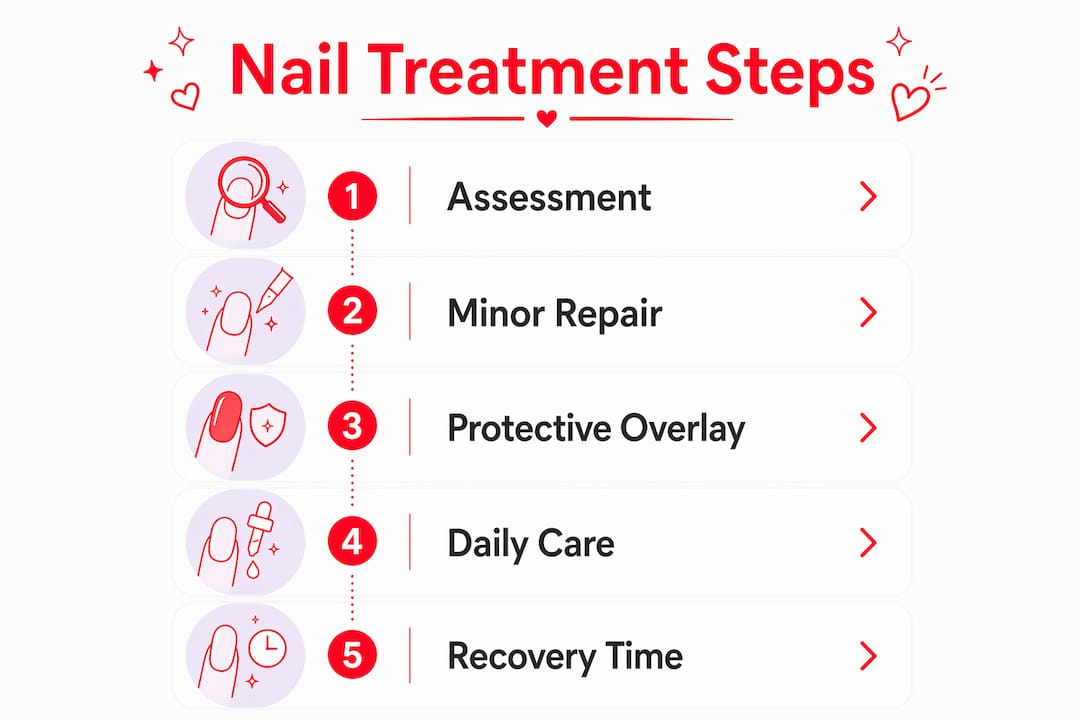
Professional nail health assessment is the step that separates a nail health treatment salon from a standard walk-in shop. Before any product touches your nail, a trained technician should examine the nail plate thickness, check for signs of onycholysis (nail separation from the bed), and identify whether the damage is cosmetic or clinical. Distinguishing cosmetic from clinical damage is crucial because some restoration systems require medical supervision, not just a salon visit.
Once the assessment is complete, proper prep follows a specific sequence:
Remove all existing product using the correct soak-off method for the product type. Forcing or peeling product off is the leading cause of nail plate delamination.
Clean and dry the nail surface thoroughly. Skipping nail dehydration before repair causes lifting and peeling within days, wasting both your money and the technician’s work.
Apply a dehydrator and primer appropriate for the overlay being used. This step creates the chemical bond that keeps the repair in place.
Avoid e-file use entirely on damaged plates. E-file use causes heat spikes and further thinning on vulnerable nails. A hand file or light buffer is the only safe tool for prep on compromised nails.
Apply the chosen overlay or repair product in thin, even layers, curing each layer fully under an LED or UV lamp.
Client habits matter as much as technician skill. If you pick at your nails, soak them in water daily, or apply acetone-heavy removers at home between appointments, even the best prep work will fail. Your technician should ask about your home routine during the assessment. If they do not, volunteer the information anyway.
Pro Tip: Before booking a manicure for damaged nails, call ahead and ask whether the salon has experience with nail restoration specifically. A general manicure salon and a nail health specialist are not the same thing.
What daily habits support salon treatments and speed up recovery?
Salon treatments provide the structure, but your daily routine determines how fast your nails actually heal. The two work together, and neglecting home care will undo professional work faster than most people expect.
The single most impactful daily habit is cuticle oil application. Daily jojoba-based cuticle oil penetrates the nail plate more effectively than common kitchen oils like coconut or olive oil, preventing the delamination cycle that keeps damaged nails stuck in a loop of peeling and splitting. Apply it twice daily, morning and night, massaging it into the nail plate and surrounding skin.
Beyond oiling, these practices protect your investment in professional nail care:
Wear gloves during cleaning and dishwashing. Hand sanitizer, cleaning products, and prolonged water exposure all contribute to nail brittleness. Gloves block the chemical contact that undoes repair work.
Keep nails short during recovery. Short nails have less leverage, which means less mechanical stress on the nail plate. Barely past the fingertip is the target length.
Avoid prolonged soaking. Hot tubs, long baths, and swimming pools soften the nail plate and loosen overlay adhesion. Limit exposure where possible.
Skip harsh nail polish removers. Acetone-free removers are gentler on recovering nails. If you need acetone, use it sparingly and follow immediately with cuticle oil.
Moisturize hands and nails after every wash. A fragrance-free hand cream applied after handwashing keeps the skin and nail surrounds hydrated, which directly supports nail flexibility.
You can find a detailed nail care routine that complements salon treatments and keeps recovering nails protected between appointments.
How long does nail recovery take, and what should you expect?
Nails damaged from acrylic or gel removal require three to six months to fully recover. That timeline reflects the biology of nail growth: fingernails grow approximately 3mm per month, meaning a full nail plate replacement takes roughly four to six months. This is not a process you can accelerate with products alone.
Visible improvement happens in stages. Around four to eight weeks after treatment begins, a noticeable line appears between the damaged nail growing out and the healthier nail growing in from the base. That line is progress. It means the matrix is producing stronger keratin layers.
Recovery stage | Timeframe | What you will notice |
Initial stabilization | Weeks 1–2 | Reduced splitting, overlay holds |
Early regrowth | Weeks 4–8 | Visible healthy nail at base |
Mid-recovery | Months 2–3 | Damaged portion moving toward free edge |
Full recovery | Months 4–6 | Entire nail plate replaced with healthy growth |
Rest periods are a legitimate part of the process, not a sign that treatment has failed. Professional guidelines recommend two weeks of rest for slightly thin nails and up to four weeks for nails with chronic splitting or soreness. During rest, nails should be kept short, oiled daily, and protected from chemical exposure.
“Most clients mistake strengthening manicures as recovery. True nail healing requires rest periods to allow keratin layers to stabilize.” — Semilac nail repair research
Signs that you need professional reassessment include pain at the nail bed, greenish discoloration under the overlay, or nails that continue to split despite consistent treatment. These symptoms may indicate infection or a clinical condition that a salon cannot address alone. Book a follow-up with your technician and, if symptoms persist, consult a dermatologist or podiatrist.
Key takeaways
Effective nail recovery combines the right salon treatment with consistent daily care and realistic expectations about the three-to-six-month regrowth timeline.
Point | Details |
Match treatment to damage level | BIAB suits post-enhancement damage; KeryFlex is for severe clinical cases requiring podiatry. |
Prep determines repair durability | Dehydration, priming, and avoiding e-files are non-negotiable steps for lasting results. |
Daily oiling is clinically supported | Jojoba-based cuticle oil penetrates the nail plate and prevents recurring delamination. |
Rest periods accelerate recovery | Two to four weeks of rest allows keratin layers to stabilize before new treatments are applied. |
Recovery takes three to six months | Visible improvement appears in stages; a healthy growth line emerges around weeks four to eight. |
Why I stopped recommending “strengthening” manicures to clients with real damage
After years of watching clients cycle through strengthening polishes and hardeners with little to show for it, I came to a conclusion that most nail content avoids: a standard manicure for damaged nails is not a treatment. It is a cosmetic cover. The nail underneath does not know it is wearing a hardener. It responds to rest, oil, and protection, not product marketing.
The clients I have seen recover fastest share two traits. They found a salon that took the assessment step seriously, meaning a technician who looked at the nail plate before reaching for product. And they committed to the home care routine without shortcuts. The ones who skipped the cuticle oil, kept their nails long, or continued soaking in water daily were still dealing with peeling nails six months later.
There is also a real problem with salons that use e-files on every client regardless of nail condition. Safe acrylic removal techniques and avoiding aggressive filing are the foundation of nail health, not optional extras. If your current salon cannot explain why they are or are not using an e-file on your specific nails, that is worth questioning.
My honest recommendation: prioritize nail health over nail aesthetics for at least one full growth cycle. BIAB overlays let you have both, but only if the underlying recovery is the actual goal. Trends come and go. Healthy nails are worth protecting.
— MinhHieu
Restore your nails at Bradentonnails in Bradenton, FL

Bradentonnails offers professional nail restoration services tailored to clients dealing with real damage, not just cosmetic concerns. The skilled technicians at TJ Nails specialize in BIAB overlays, silk wrap repairs, and expert gel removal using prep protocols that protect your natural nail plate throughout the process. Every service is delivered in a clean, relaxed environment with personalized attention to your nail health goals.
Whether you need a minor repair or a full recovery plan, Bradentonnails is equipped to assess your nails and recommend the right path forward. Book your appointment at the Bradenton nail salon and take the first step toward genuinely healthy nails. For clients interested in a gentler strengthening option, SNS dipping services are also available as a low-stress alternative during recovery.
FAQ
What is the best salon treatment for damaged nails?
BIAB overlays are the most widely recommended salon treatment for nails damaged by acrylic or gel removal. They protect the nail plate during regrowth with minimal prep and no buffing, which prevents further thinning.
How long does it take for damaged nails to recover with salon treatment?
Recovery typically takes three to six months, reflecting the time needed for a full nail plate to grow out. Visible improvement, including a healthy growth line at the nail base, usually appears around weeks four to eight.
Can a regular manicure fix damaged nails?
A standard manicure addresses cosmetic appearance but does not repair structural nail damage. True recovery requires rest periods, protective overlays like BIAB, and consistent daily oiling to allow keratin layers to stabilize.
How do I know if my nail damage needs a podiatrist instead of a salon?
Signs that require clinical assessment include pain at the nail bed, greenish discoloration under the nail, or nails that continue to deteriorate despite consistent salon treatment. KeryFlex and similar medical-grade restorations are performed by podiatrists, not nail technicians.
What should I ask a salon before booking a nail repair appointment?
Ask whether the technician has experience with nail restoration specifically, whether they use an e-file on damaged nails, and what prep protocol they follow. A qualified nail health salon will answer these questions without hesitation.
Recommended
Comments