
How Salons Prevent Nail Infections: What You Need to Know
Most people walk into a nail salon assuming the place is clean because it looks clean. That assumption is where the risk begins. Understanding how salons prevent nail infections goes far beyond shiny surfaces and pleasant smells. There are specific protocols, tools, and techniques that separate a genuinely safe salon from one that cuts corners. This article breaks down what professional infection prevention actually looks like, what questions you should be asking, and how to protect your nail health every time you sit down for a service.
Table of Contents
Key takeaways
Point | Details |
Biofilm removal comes first | Tools must be scrubbed clean before disinfectants can work effectively. |
Disposables are non-negotiable | Porous items like emery boards must be single-use to prevent cross-contamination. |
UV lamps do not sterilize | Salon curing lamps only harden gel products and cannot kill pathogens on tools. |
High-risk clients need extra steps | People with diabetes or weakened immunity should bring personal sterilized tools or seek certified technicians. |
You are your best defense | Observing a salon’s hygiene behavior before and during your appointment is the most reliable protection. |
How salons prevent nail infections: common causes and risks
Before you can appreciate what a good salon does right, you need to understand what can go wrong. Nail services create a surprisingly favorable environment for microbial growth. Warmth, moisture, and minor skin trauma all combine to give bacteria, fungi, viruses, and even parasites an opening they would not otherwise have.
The most frequently seen nail infections include onychomycosis, a fungal infection that causes nails to thicken and discolor, and paronychia, a bacterial infection of the skin surrounding the nail. Both are often traced back to salon visits where hygiene protocols were skipped or rushed.
Here is what typically drives infection risk in a salon setting:
Shared tools without proper sterilization. Metal tools like nippers and pushers can carry bacteria from one client to the next if they are not fully sterilized between uses.
Moisture in pedicure basins. Whirlpool foot baths harbor biofilm, a protective layer of microorganisms that clings to surfaces and resists basic cleaning agents.
Micro-trauma from aggressive techniques. Cutting cuticles or using razor tools on calluses creates small wounds. Even a tiny break in the skin is an entry point for pathogens.
Porous tools used on multiple clients. Items like nail files and buffers trap microorganisms in their surface and cannot be fully disinfected even with chemical agents.
Pro Tip: Arriving with a small nick or cut on your hands or feet significantly raises your infection risk. If your skin is broken, consider rescheduling or at minimum alerting your technician before the service begins.
Standard sterilization protocols in professional salons
Professional salons follow a layered approach to sanitation. No single step is sufficient on its own. When all layers are applied correctly, the risk of passing an infection from one client to another drops dramatically.
Here is how the process works in a properly run salon:
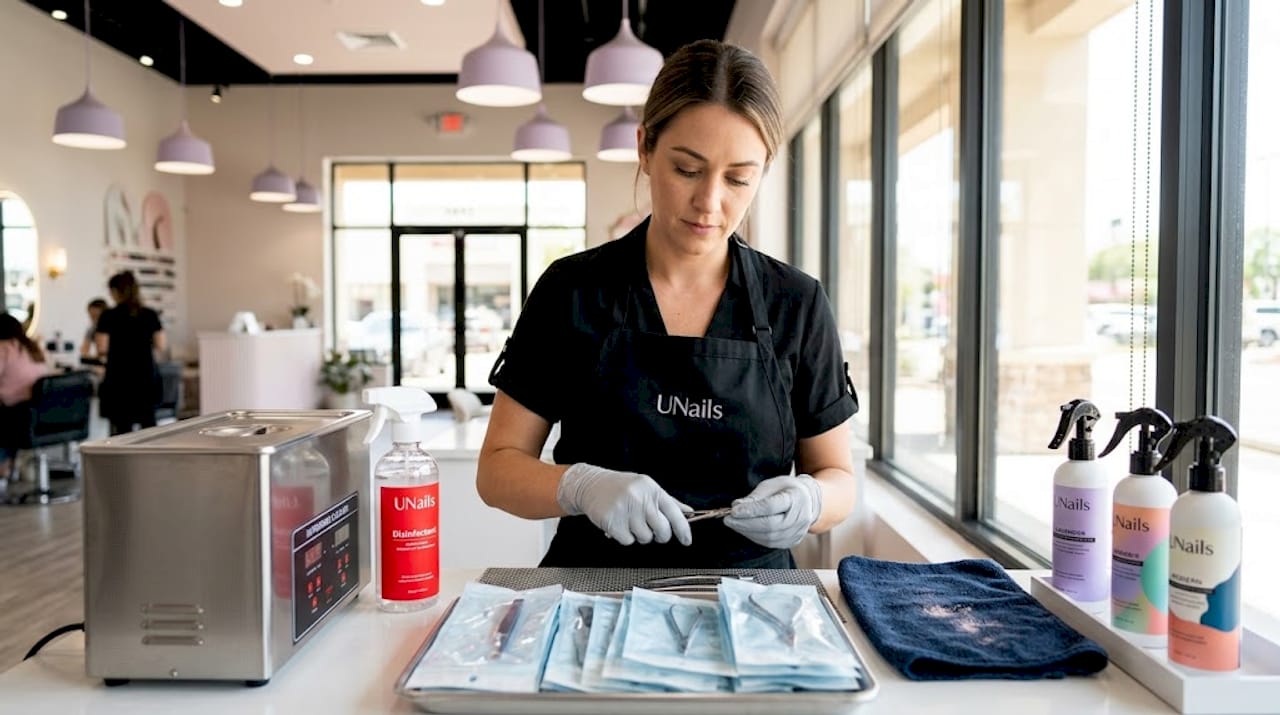
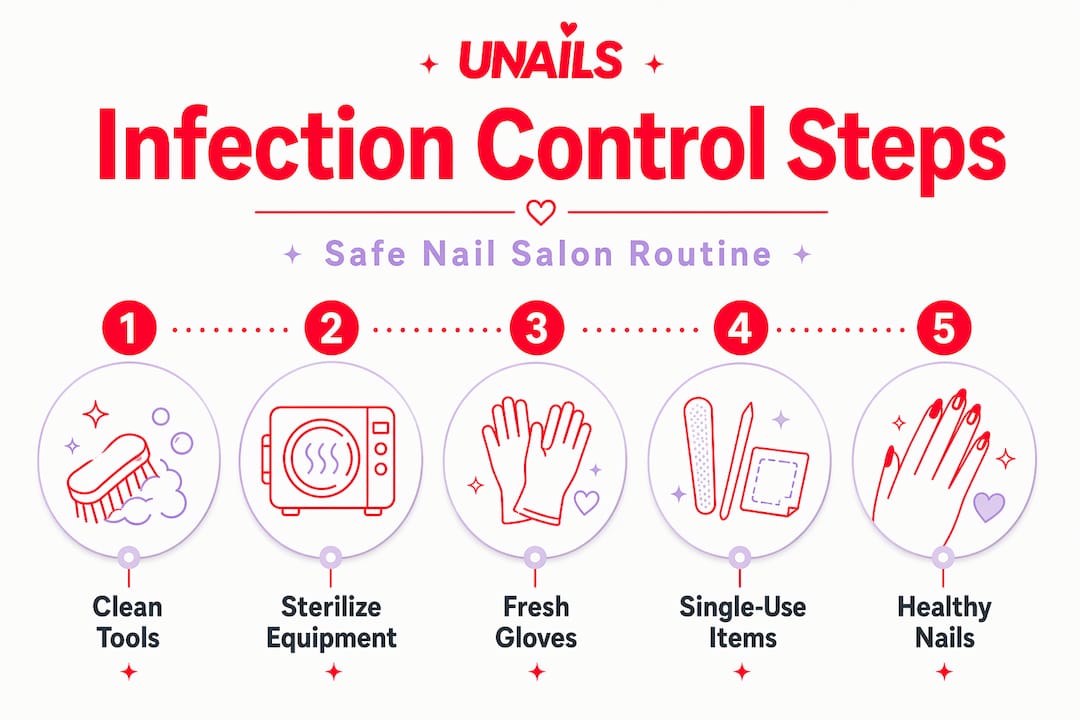
Mechanical cleaning first. Tools are scrubbed with a brush and soap to physically remove debris and the microbial load that sits on surfaces. This step is not optional. Skipping this step causes disinfectants to fail entirely because biofilm blocks chemical penetration.
EPA-registered disinfectant immersion. After scrubbing, metal tools are fully submerged in a hospital-grade, EPA-registered disinfectant for a minimum of 10 minutes. Contact time matters as much as the product itself.
Autoclave sterilization for tools that contact blood. Any tool that touches broken skin or draws blood must go through autoclave sterilization at 121°C for 15 to 20 minutes at 15 psi. This is the gold standard for killing all pathogens including spores.
Single-use disposables for porous items. Emery boards cannot be sterilized and must be discarded after each client. The same applies to nail files, buffers, and similar tools.
Disposable liners for pedicure basins. Single-use plastic liners placed inside foot basins prevent direct contact between the basin surface and your skin.
One misconception worth addressing directly: UV curing lamps do not disinfect anything. Salon UV lamps only polymerize gel products and have no germicidal intensity. Some salons use UV-C cabinets as a secondary step after autoclave sterilization, but they are not accepted as a primary sterilization method in most states.
Method | What it kills | Accepted as primary sterilization? |
Autoclave (steam) | All pathogens including spores | Yes |
EPA disinfectant immersion | Most bacteria, fungi, viruses | Yes (for non-critical tools) |
UV-C cabinet | Surface-level organisms only | No (secondary use only) |
UV curing lamp | Nothing (cosmetic use only) | No |
Pro Tip: Ask your salon whether their autoclave is serviced and logged regularly. Reputable salons maintain a sterilization log. If they cannot tell you when the autoclave was last tested, that is a red flag.
How salons handle tools and client interactions safely
Sterilization happens in the back room. What happens at your station matters just as much. Nail infection prevention techniques are only effective if technicians apply them consistently during every service, with every client.
Here is what a properly trained technician does during a session:
Changes gloves for every new client. Fresh gloves are a basic requirement, not a bonus. Technicians are required to sanitize hands and wear new gloves before beginning any service.
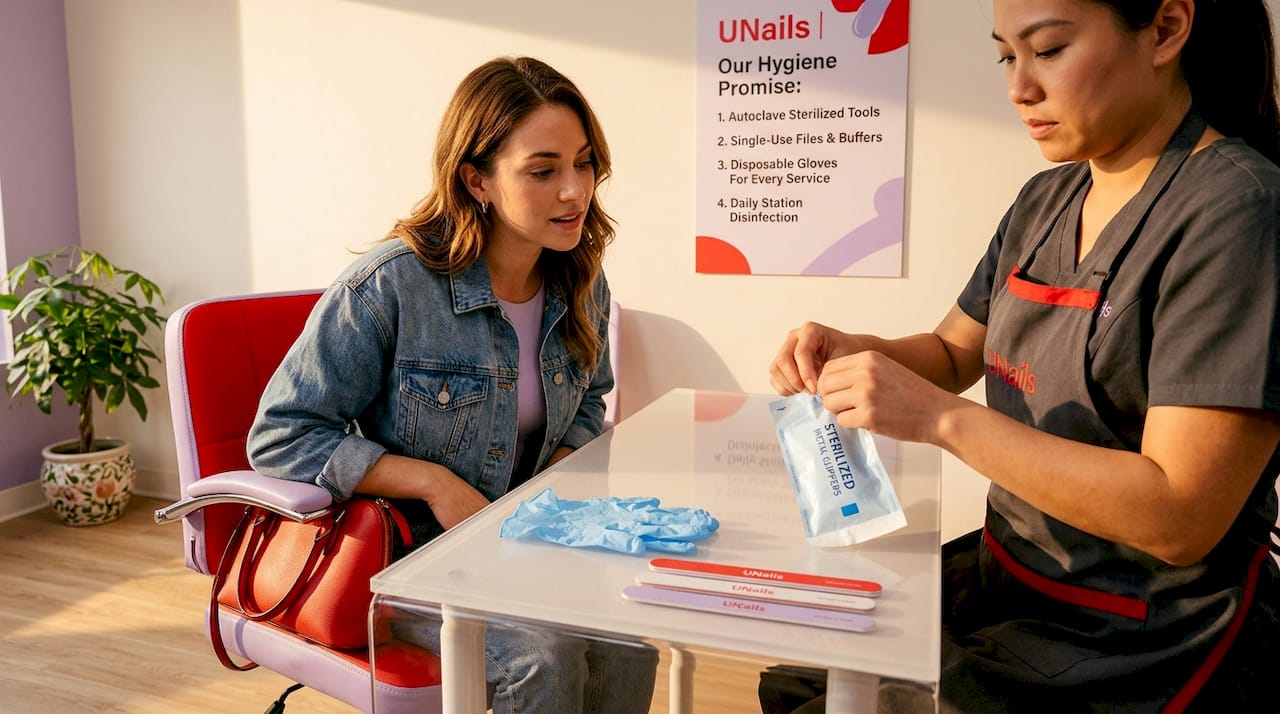
Opens sealed sterilized tools in front of you. When a salon opens a sealed pouch of autoclaved tools at your station, that is transparency you can trust. It signals the tools have not been handled since sterilization.
Uses a fresh disposable bowl cover for pedicures. Watch for this at the start of your pedicure. The liner should come out of a sealed package and be placed inside the basin before water is added.
Avoids cutting cuticles. This is not just a comfort preference. Cutting cuticles creates entry points for bacteria and fungi. Safe practice involves gently pushing cuticles back rather than removing them.
Declines razor tools on calluses. Many clients request callus shaving, but using razor-like tools on the feet creates micro-wounds that directly increase infection risk. Skilled technicians use safer exfoliation methods instead.
You also have a role in this process. Verifying that disposable items are fresh and sealed, watching glove changes, and checking that tools are opened from a sterilized pouch are all things you can observe without saying a word.
Special considerations for high-risk clients
If you have diabetes, are undergoing chemotherapy, or have a condition that affects circulation or immunity, your relationship with nail salon hygiene needs to be more deliberate. The stakes are simply higher. A minor skin break that heals in two days for a healthy person can turn into a serious infection for someone whose immune system is compromised.
High-risk individuals should avoid cutting tools entirely and be clear with their technician about their health status before the service begins. Some salons have technicians certified in medical nail care. That certification means they have specific training in safe handling techniques for vulnerable clients.
If your salon does not have this certification, you have two solid options. Bring your own sterilized tools in a sealed kit, which removes the cross-contamination variable entirely. Or seek out a salon that participates in a Healthy Nail Salon Recognition Program. These programs are third-party verified and indicate that a salon meets standards beyond the legal minimum.
Client tips for avoiding nail infections
Knowing how to avoid nail infections is not just about choosing the right salon. It is also about what you do before you arrive, during your appointment, and in the days after. Here is a practical sequence to follow:
Research before you book. Check reviews specifically for mentions of cleanliness and hygiene. Look for comments about tools being opened fresh or technicians wearing gloves. Read the salon comparison guide to know exactly what signals to look for.
Do not shave your legs before a pedicure. Freshly shaved skin has micro-abrasions that increase vulnerability to infection. Wait at least 24 hours after shaving before getting a pedicure.
Watch the setup at your station. Before the service starts, confirm your technician washes or sanitizes their hands, puts on fresh gloves, and opens tools from a sealed packet or sterilized pouch.
Skip the cuticle cutting. If a technician automatically reaches for cutting tools, speak up. Ask for pushing instead of trimming.
Monitor your nails for 7 to 10 days after your appointment. Redness, swelling, or pain after a nail service are early signs of infection. If you notice any of these, do not wait. See a doctor rather than treating it yourself with over-the-counter products.
Pro Tip: Between visits, keep your nails trimmed, dry, and moisturized. A healthy nail bed is significantly harder for fungi and bacteria to colonize. Read up on a solid nail care routine to maintain results between appointments.
The bio-burden on tools is the foundational concept behind all effective infection control. When you understand that term, you understand why every step in the sterilization process matters. It is not theater. It is science.
My take on what really goes wrong in salons
I have spent a long time watching how this industry handles hygiene, and the honest answer is that even upscale salons get this wrong more often than clients realize. The problem is almost never malicious. It is usually rushed. Mechanical cleaning before disinfection takes time, and when a salon is fully booked, that step gets shortened or skipped. The failure to remove biofilm before applying chemical disinfectant is the single most common reason infections still happen in places that look perfectly clean.
What I have learned is that clients who ask questions get better treatment. Not because asking shames anyone, but because it signals that you are paying attention. Technicians who know you are watching tend to follow protocol more carefully. That is not cynicism. That is human nature, and you can use it to your advantage.
The other thing I would tell anyone who is genuinely concerned: being your own advocate is not rude. Walking out of a salon that cannot answer basic questions about sterilization is the right call. No appointment is worth a nail infection that takes months to treat.
— MinhHieu
Safe nail care in Bradenton starts here
If you want nail services where hygiene is not an afterthought, Bradentonnails at TJ Nails in West Bradenton is worth your time. The team follows documented cleaning protocols for salons, uses single-use disposables for all porous tools, and opens sterilized instruments in front of clients. Whether you are booking a classic manicure in Bradenton, a relaxing pedicure near you, or a specialized SNS dipping service, the focus on cleanliness is consistent across every service. Bradentonnails also offers flexible hours including Sundays, making it easy to book around your schedule. You deserve a salon where safety is visible, not just claimed.
FAQ
What makes a nail salon genuinely safe from infections?
A safe salon uses autoclave sterilization for metal tools, single-use disposables for porous items, EPA-registered disinfectants with proper contact times, and fresh gloves for every client. Transparency during the setup process is the clearest sign of a trustworthy salon.
Can you get a fungal infection from a nail salon?
Yes. Fungal infections like onychomycosis can spread through shared tools, reused pedicure basins without liners, or contact with contaminated surfaces. Proper sanitation in nail salons prevents the vast majority of these cases.
Are UV lamps in salons used to prevent infections?
No. Salon UV curing lamps are designed to harden gel products and have no germicidal effect. They should never be treated as a disinfection tool or a substitute for proper sterilization.
How do I know if a salon is following hygiene protocols?
Watch for technicians washing hands and changing gloves before your service, tools being opened from sealed sterilized pouches, and fresh disposable liners being used in pedicure basins. Use this salon visit checklist as a quick reference before you book.
What should I do if I notice symptoms after a nail appointment?
If you see redness, swelling, or pain around the nail within 7 to 10 days of a salon visit, consult a doctor promptly. Early treatment prevents minor infections from becoming serious problems.
Recommended
Comments