
Your nail salon visit checklist for safe, stylish nails
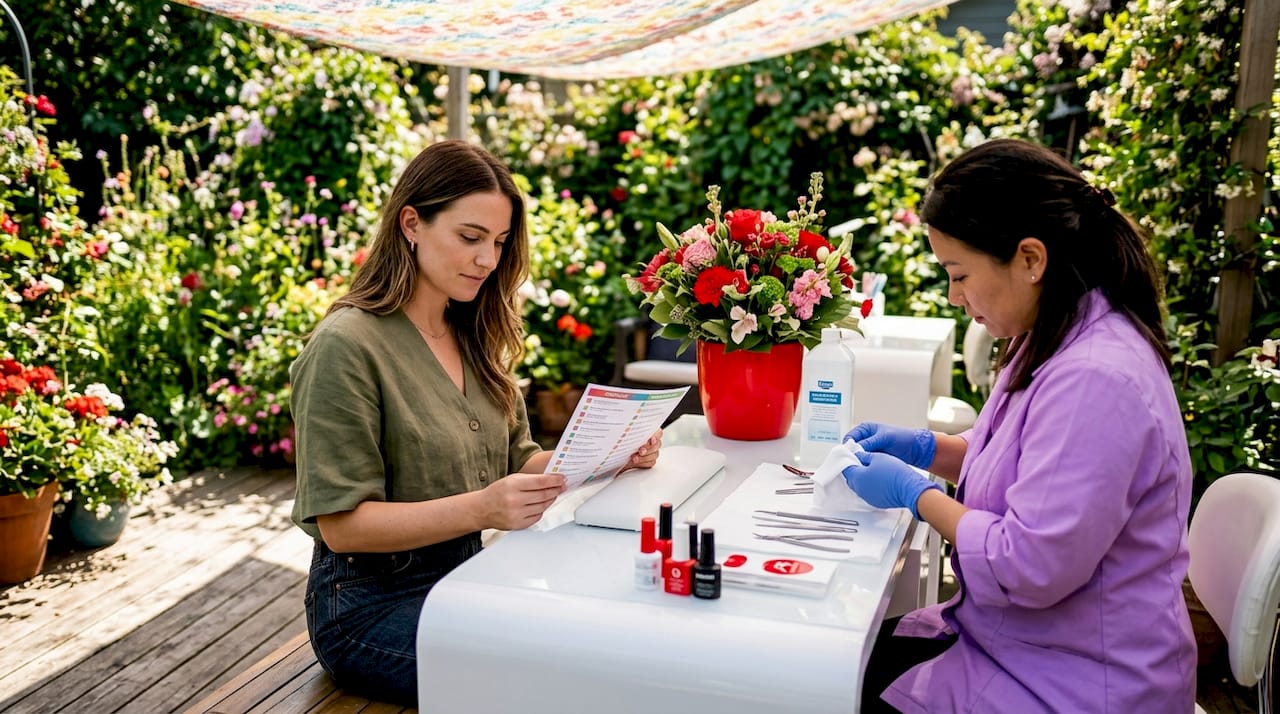
Choosing a nail salon should feel exciting, not nerve-wracking. Yet so many women in Bradenton walk into appointments secretly hoping everything is clean, the tools are fresh, and the technician actually listens to what they want. The truth is, not every salon that displays gorgeous nail art on its walls practices the level of safety your hands and feet deserve. A clear, practical checklist removes the guesswork entirely, so you can sit back, enjoy the experience, and leave with nails that look exactly how you imagined them.
Table of Contents
What to check before you book: Safety and cleanliness essentials
The ultimate in-service checklist: Nail art, tools, and technician practices
Comparing salon safety and service quality: What sets the best apart
Salon-proven nail health tips: What the experts really recommend
Our take: Why Bradenton’s best salons go beyond the checklist
Key Takeaways
Point | Details |
Check for sanitation | Properly sanitized tools and foot spas are a must for your safety. |
Watch technician habits | Notice if gloves, clean tools, and gentle practices are standard during your service. |
Ventilation reduces risks | Good airflow and fume control protect both you and your nail technician from chemical exposure. |
Protect nail health | Following dermatologist advice keeps your nails strong between appointments. |
Empower your choices | A clear checklist helps you confidently select the best salon for beauty and safety. |
What to check before you book: Safety and cleanliness essentials
Having established the importance of confidence, let’s start with the hygiene and protection basics every visitor should check before even booking their appointment.
Cleanliness is not just about sparkling floors and matching decor. It is about the behind-the-scenes processes that protect you from bacterial infections, fungal issues, and cross-contamination between clients. These are the first things to evaluate before you hand over your phone number or click “book now.”
Here is a numbered checklist of what to look for:
Sealed or freshly sanitized tools. Watch whether tools arrive in sealed sterile pouches, or whether the technician wipes them down with a hospital-grade disinfectant right in front of you. If tools come from a shared drawer without any visible sanitation step, that is a red flag.
Foot spa disinfection process. Ask upfront how the salon cleans its foot spas between clients. The EPA foot-spa disinfection guidance is clear: after cleaning, surfaces must be disinfected with an EPA-registered hospital disinfectant and kept wet for 10 minutes or the full label time, and for whirlpool, air-jet, or pipe-less circulating spas, disinfectant must circulate through the entire unit for the full contact time. If the salon cannot explain a process that matches this, keep looking.
Clean and clutter-free workstations. A station covered in product buildup, used cotton pads, or unlabeled bottles is a sign that cleanliness is not a priority. The best salons reset each station between every client.
Visible EPA-compliant signage. Many quality salons post their sanitation procedures or certification near the pedicure stations. This transparency is a strong trust signal.
Staff personal hygiene. Technicians should wash their hands between clients, wear fresh gloves, and maintain clean uniforms throughout the day.
“After cleaning, disinfect surfaces with an EPA-registered hospital disinfectant and keep wet for 10 minutes or label time; for whirlpool/air-jet/pipe-less circulating spas, circulate disinfectant through the unit for the entire contact time.” — EPA Cleaning and Disinfection Procedures
Pro Tip: Ask the salon receptionist or front desk staff if you can see their sanitation log. Reputable salons keep records of foot spa cleaning after every client. If they hesitate or seem surprised by the question, treat that as useful information about how seriously they take hygiene.
For more detail on staying protected during your visit, check out these pedicure safety tips and learn about safe gel nail removal practices that protect your natural nails in the long run.
The ultimate in-service checklist: Nail art, tools, and technician practices
Once you have been seated, it is time to turn your attention to what happens during your service, including tools, technician habits, and key nail art considerations.
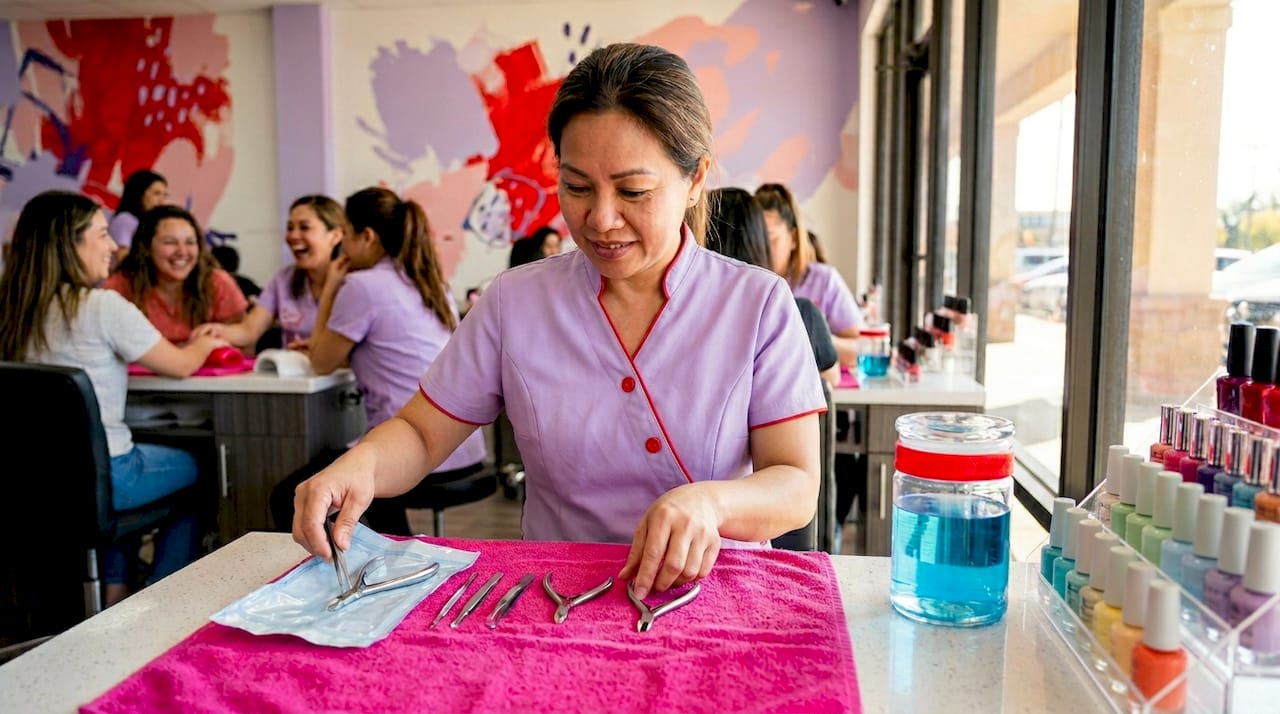
Being in the chair gives you a front-row view of the practices that either protect your nail health or quietly compromise it. Use this time to observe and ask questions. A skilled, professional technician will welcome your curiosity.
Here is what to watch for once your service begins:
Fresh gloves per client. Your technician should put on a new pair of gloves before working on your nails. This protects both of you and signals they follow proper infection control.
No double-dipping in product containers. Brushes, spatulas, and applicators should never go back into a shared product jar after touching a client’s skin or nails. Single-use or sanitized tools only.
Proper ventilation or fume extractors at the station. Acrylic and gel services release chemical vapors. High-quality salons use table-top fume extractors or maintain strong ventilation systems to pull those fumes away from both you and the technician. This is not optional for services involving liquid monomers or UV gels.
Gentle cuticle practices. Many women do not realize that cutting cuticles is actually discouraged by dermatologists and health authorities. The cuticle is a protective barrier. Aggressive cutting creates small cuts that become entry points for bacteria. A good technician will soften and gently push back the cuticle, not cut it.
Smooth, controlled filing. Heavy back-and-forth sawing weakens the nail plate over time. Watch for technicians who file in one direction with light, deliberate strokes.
Clear communication during nail art services. Great nail art is a collaboration. Your technician should explain which products they are using, confirm the design before committing, and check in as they work. If you are getting a detailed design, that conversation matters a lot.
The EPA standards for tool handling reinforce this point: before any service, sealed or clean tool handling, correct disinfectant contact times, and visible ventilation and PPE practices all work together to reduce both infection and chemical exposure risks. These are not overreactions. They are the baseline.
Pro Tip: Bring inspiration photos for your nail art, but also ask your technician whether the products they use for detailed work, like nail dyes, glitters, and adhesive gems, are non-toxic or free of harsh formaldehyde-based compounds. The best salons stock 3-free, 5-free, or 7-free polishes and will tell you exactly what is in their product line. For guidance on how to protect your nails during gel services, read up on gel nail safety tips.
Comparing salon safety and service quality: What sets the best apart
To help make sense of all these in-the-moment details, see how top salons distinguish themselves with a comparison of service and safety features.
Not all salons operate at the same standard, even when their prices are similar. This table gives you a quick reference to compare what you observe during your visit or research phase.
Feature | Average salons | Top-rated salons |
Tool sanitation | Shared or wiped with unclear products | Sealed pouches or hospital-grade disinfectant |
Foot spa cleaning | Rinsed between clients | Full EPA-compliant disinfection with contact time |
Ventilation | Basic ceiling fans | Fume extractors and proper air circulation |
PPE (Personal Protective Equipment) | Inconsistent glove use | Gloves changed per client, masks where needed |
Nail art customization | Limited preset designs | Collaborative, personalized designs with non-toxic products |
Transparency | Vague answers to hygiene questions | Openly displays certificates and explains processes |
Station cleanliness | Product buildup, used tools visible | Reset and clean between each appointment |
According to CDC/NIOSH guidance on nail technician chemical safety, good ventilation significantly reduces chemical exposure levels in the air, and nail technicians can further reduce exposure by using ventilation systems and wearing PPE such as gloves and, when appropriate, respirators. What this means for you as a client is that if you walk into a salon and smell overwhelming fumes or notice no visible ventilation equipment near acrylic stations, that salon is not meeting basic safety recommendations.
The salons that stand out are not just checking boxes. They proactively show you the disinfectant products they use, explain their process without being asked, and keep their stations visibly clean under bright lighting. A well-lit workstation is actually a practical signal. Good lighting means the technician can do precise work, and it also means they are not hiding anything. You can learn more about how eco-friendly salon practices connect to healthier chemical choices and safer environments for both clients and staff.
Salon-proven nail health tips: What the experts really recommend
Lastly, making your salon results last and keeping nails healthy comes down to a mix of expert advice and empowered questioning.
The American Academy of Dermatology (AAD) offers straightforward guidelines that every nail salon client should know before walking in. Following this advice protects your nails between appointments and helps you get better, longer-lasting results from every service.
Here is what the experts recommend:
Keep nails clean and dry. Bacteria and fungi thrive in moist environments, so dry thoroughly after washing your hands and avoid prolonged exposure to water immediately after a manicure.
Cut nails straight across. Use sharp nail clippers and trim straight across to avoid ingrown nails, then gently round the tips with a file.
Do not cut or remove the cuticle. The AAD nail care guidelines are explicit: removing the cuticle damages the natural nail barrier and increases infection risk.
Avoid nail biting and picking. These habits introduce bacteria from your mouth and break down the nail plate faster than almost any salon practice.
Moisturize your nails and hands. Apply lotion to your nails and cuticles after washing your hands to prevent dryness and brittleness.
Ask your technician about their hygiene process. You are not being difficult. You are being a smart, informed client. A professional technician will appreciate it.
“Keep nails clean and dry because bacteria and fungi thrive in moist environments; do not remove the cuticle; and protect nails from excessive water.” — American Academy of Dermatology
Between visits, gentle nail trims and a good cuticle oil go a long way. If you notice peeling, breakage, or unusual discoloration after a salon visit, take it seriously and follow up with a professional. You can find detailed guidance on nail damage prevention and read specific advice on safe acrylic removal to protect your natural nails during transitions between styles.
Our take: Why Bradenton’s best salons go beyond the checklist
Now that we have covered the essentials, let us reflect on what really defines an exceptional nail salon experience for Bradenton locals.
Here is an honest observation: the checklist sets the floor, not the ceiling. You can find a technically compliant salon that still feels cold, rushed, or impersonal. The salons that genuinely earn their reputation in a community like Bradenton go a step further in ways that are harder to put in a numbered list.
The best local salons build trust through small, consistent gestures. A technician who remembers your usual nail shape, suggests a color that actually works with your skin tone, or gently flags a nail issue before it becomes a bigger problem is offering something a checklist cannot fully capture. That kind of attentiveness is rare, and clients feel it immediately.
Many standout Bradenton salons also show genuine care about ingredient sourcing. They stock product lines that are free of the most harmful chemicals, display their certifications openly, and will explain their choices if you ask. This transparency is not just good PR. It signals a culture where quality is the default, not the exception.
The most important thing we have learned from working with clients in this community is that people want to feel safe enough to express themselves freely. When you trust your salon, you stop second-guessing whether to try the bold chrome gel or the intricate floral design. You just enjoy the process. And that is exactly what a nail appointment should feel like.
Explore the full range of nail salon services available to help you decide what to book on your next visit.
Ready for your next personalized, safe nail salon visit?
With your checklist and expert tips in hand, you are ready to choose Bradenton’s top salons for your next nail art or spa session.
At TJ Nails in Bradenton, every appointment is built on the standards you just read about. Our team uses proper sanitation protocols, maintains clean and well-lit stations, and works with you step by step to deliver nail art and care that fits your individual style. Whether you prefer a classic French manicure or something bold and expressive, you will feel heard and protected from the moment you walk in.
Visit our pages to explore your options and book with confidence: find local manicure salons and review all available pedicure options near you. If you are curious about powder systems, browse our SNS dipping services for long-lasting color with a healthier application process. Your next great nail experience is one appointment away.
Frequently asked questions
How can I tell if a nail salon disinfects properly?
Look for sealed tools and evidence of a 10-minute disinfectant contact time at whirlpool or foot spa stations, as required by EPA disinfection guidelines. Reputable salons will explain their process clearly if you ask.
Is it safe to have my cuticles trimmed during a manicure?
Dermatologists at the AAD advise against removing the cuticle because it acts as a natural barrier against bacteria and infection. Ask your technician to push back and soften the cuticle instead.
What if I notice strong chemical fumes inside the salon?
Strong fumes suggest poor ventilation, which CDC/NIOSH identifies as a significant risk factor for increased chemical exposure for both clients and technicians. Consider requesting a different station or choosing a salon with visible fume extraction equipment.
How often should I visit the salon for healthy nails?
Spacing visits every two to four weeks for manicures or pedicures gives your nails time to recover naturally and reduces the cumulative stress of repeated filing, soaking, or product application.
What extra steps should I request for designs or nail art?
Ask your technician to confirm they use non-toxic dyes, adhesives, and glitters, and request that all detail brushes and art tools are cleaned between uses to prevent cross-contamination during your service.
Recommended
Comments