
Gel Nails vs Regular Polish: What You Need to Know
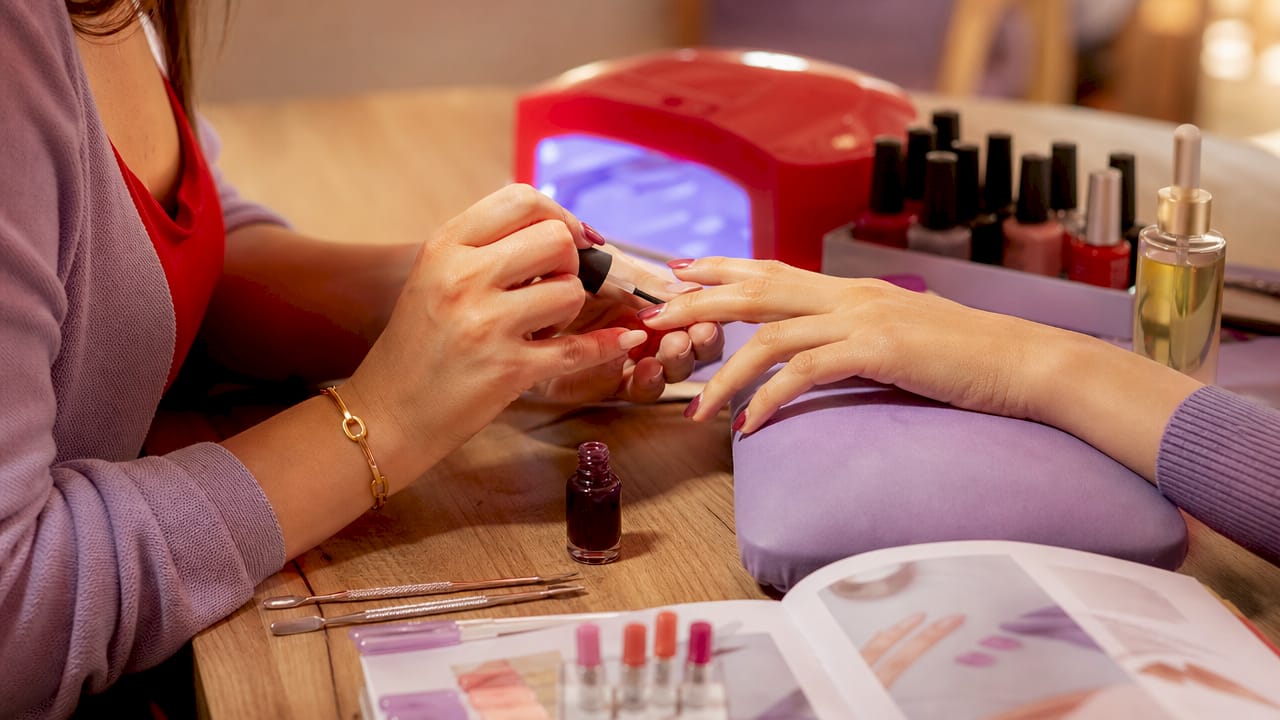
Gel nails and regular polish are two distinct nail care options defined by how they cure and how long they last. Gel polish forms a hard, cross-linked polymer coating that cures under a UV or LED lamp, delivering 2–3 weeks of wear with strong chip resistance. Regular polish air-dries on its own and typically lasts 3–7 days before chipping or dulling. The right choice between gel nails vs regular polish comes down to your lifestyle, how often you want to change your color, and how much time you want to spend on maintenance.
How do gel nails and regular polish differ in application?
Gel polish and traditional nail lacquer follow completely different application processes. That difference affects your time, your equipment, and your skill level.
Gel polish requires a UV or LED lamp to cure each coat. Each layer sets in roughly 60 seconds under an LED lamp. Without curing, the gel stays tacky and never hardens properly. You also need a dehydrator, a primer or base coat formulated for gel, and a gel top coat. That is a meaningful upfront investment compared to a bottle of regular polish and a top coat.

Regular polish air-dries through solvent evaporation. The full drying process takes 15–20 minutes, and nails stay smudge-prone for much of that time. The application itself is simpler. You need no special equipment, no lamp, and no technical prep beyond a standard base coat.
The learning curve for gel is real. Applying thin, even coats matters more with gel than with regular polish because thick gel coats can trap air bubbles and lift at the edges. Proper nail dehydration before gel application improves adhesion and wear time significantly. Skipping this step is one of the most common reasons a gel manicure lifts early.
Pro Tip: Cap the free edge of each nail with gel polish on every coat. This technique, called “capping the free edge,” seals the tip and greatly reduces lifting and chipping at the nail’s most vulnerable point.
What are the durability and aesthetic differences?
Gel polish outlasts regular polish by a wide margin. That gap is the single biggest reason people choose gel.
Gel lasts 2–3 weeks with minimal chipping and retains its high-gloss finish throughout. Regular polish begins to dull and chip within a few days, especially with frequent handwashing, cooking, or typing. For anyone with an active daily routine, regular polish often looks worn by day four or five.
The aesthetic difference is also noticeable. Gel forms a thicker, more uniform surface that holds color depth and shine far longer. Regular polish can look fresh on day one but loses its luster quickly. Gel polish keeps its shine longer because the cured polymer resists water and daily wear in a way that air-dried lacquer cannot.
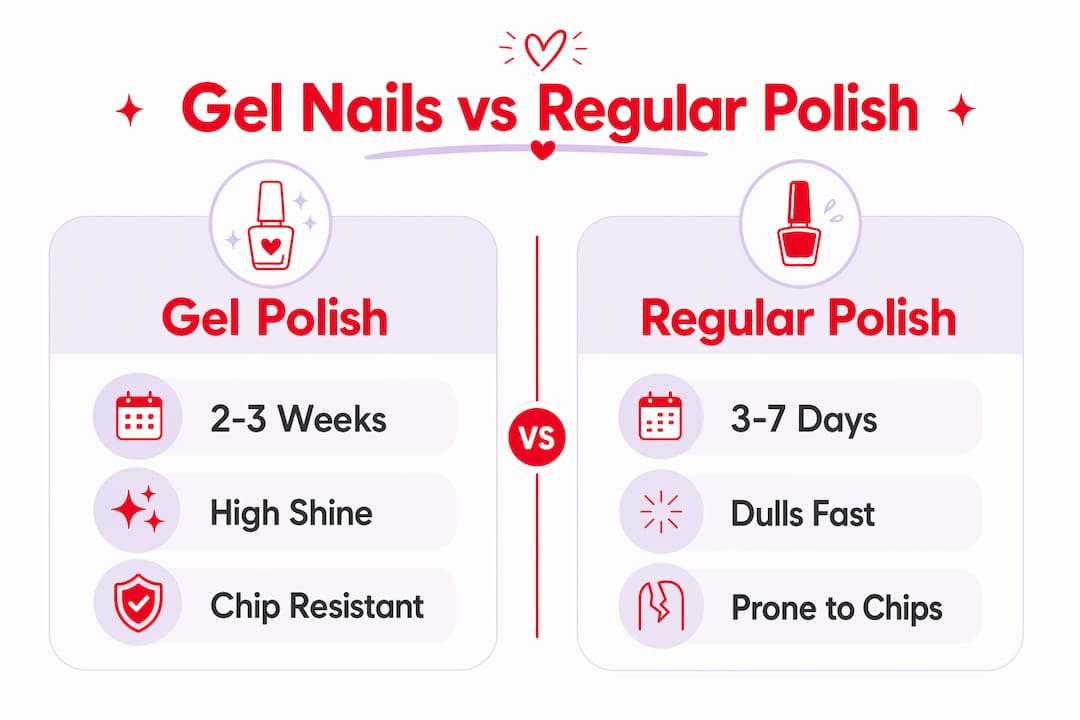
Here is a direct comparison of the two options across key performance factors:
Factor | Gel polish | Regular polish |
Wear time | 2–3 weeks | 3–7 days |
Chip resistance | High | Low to moderate |
Shine retention | Sustained throughout wear | Dulls within days |
Drying method | UV/LED lamp, ~60 seconds per coat | Air-dry, 15–20 minutes |
Color change frequency | Less frequent | As often as desired |
For people who travel frequently, work with their hands, or simply do not want to think about their nails for two weeks, gel is the clear winner on durability. For people who like switching colors weekly or prefer a lighter, thinner feel on the nail, regular polish fits better.
What impact do gel nails have on nail health?
Gel polish does not damage nails by itself. The damage almost always comes from incorrect removal.
Peeling or scraping gel when it is not properly soaked off strips away layers of nail keratin, leaving nails thin, brittle, and prone to breaking. Proper removal requires soaking nails in acetone for 10–15 minutes until the gel lifts on its own. Forcing it off before that point causes the damage that many people mistakenly blame on gel itself. For a full walkthrough on doing this safely, the gel nail removal guide at Bradentonnails covers every step.
Regular polish removal is far gentler. Standard remover takes under 2 minutes and carries no meaningful damage risk when used normally. Acetone-based removers can dry out the skin around the nail, but the nails themselves stay intact.
A few practices protect nail health during regular gel use:
Choose HEMA-free gel formulas to lower the risk of contact allergies, which can develop with repeated exposure to certain gel monomers.
Apply cuticle oil daily during a gel manicure. Hydration and cuticle care are critical to keeping nails flexible and preventing brittleness under the gel coating.
Take breaks between gel applications. Giving nails one to two weeks of regular polish or bare time allows them to recover moisture and strength.
Use a crystal nail file rather than a coarse emery board when shaping nails. Crystal files preserve the nail’s edge integrity and reduce micro-tears that weaken the nail over time.
Pro Tip: Between gel manicures, apply a strengthening base coat and wear regular polish for one to two weeks. This gives your nails a recovery period without sacrificing color.
Your nail care routine between salon visits matters as much as what happens in the salon chair. Consistent hydration and gentle handling make a measurable difference in long-term nail health.
How do cost and convenience compare?
Gel costs more upfront, but the math changes when you factor in how long it lasts.
At a salon, a gel manicure typically runs $35–$90 AUD, while a regular polish manicure costs $15–$45 AUD. At home, gel application costs $3–$5 per use once you own the lamp and products, compared to $1–$3 for regular polish. The initial lamp purchase is the biggest barrier for at-home gel users.
Convenience cuts both ways. Gel wins on wear time and maintenance frequency. You book one appointment and forget about your nails for two weeks. Regular polish wins on flexibility. You can change your color in 10 minutes at home with no equipment and no commitment. If you like matching your nails to your outfit or mood, regular polish fits that habit far better.
Time is also a factor at the salon. A gel manicure takes longer due to curing steps and prep. A regular polish manicure is faster from start to finish. For people with tight schedules, that time difference matters.
What strategies do nail experts recommend for balancing both?
The most practical approach is not choosing one permanently. Many nail care professionals recommend a hybrid strategy that uses gel for durability when you need it and regular polish for flexibility and nail recovery the rest of the time.
Practical recommendations from nail professionals include:
Use gel for events, vacations, or busy periods when you cannot maintain regular touch-ups.
Switch to regular polish between gel cycles to give nails a break and restore moisture.
Never rush removal. Forced removal is the leading cause of nail damage attributed to gel.
Keep cuticle oil in your bag and apply it daily, especially during a gel manicure cycle.
One underused technique: applying regular polish over cured gel allows a temporary color change without removing the gel underneath. Use a non-acetone remover to take off only the top layer of regular polish. The gel base stays intact, and you get a fresh color without a full removal and reapplication.
Pro Tip: If your gel manicure is still intact at week two but you want a new color, paint over it with regular polish. Remove just the top layer with non-acetone remover when you are ready to change again.
Key Takeaways
Gel polish lasts 2–3 weeks with sustained shine and chip resistance, while regular polish suits frequent color changes and simpler maintenance. The best choice depends entirely on your lifestyle, not on which product is objectively superior.
Point | Details |
Durability gap is significant | Gel lasts 2–3 weeks; regular polish chips within 3–7 days under normal daily activity. |
Removal technique protects nails | A 10–15 minute acetone soak prevents the keratin damage caused by peeling gel off early. |
Cost evens out over time | Gel costs more per session but fewer applications make the per-day cost comparable. |
Hybrid use is the expert approach | Alternating gel and regular polish preserves nail health while giving you flexibility. |
Nail prep determines gel wear | Dehydrating nails and capping the free edge are the two steps most people skip and most regret. |
What I have learned from watching people choose the wrong option
People almost always pick gel because they want their nails to look good longer. That is a perfectly valid reason. But the ones who end up frustrated are usually the people who chose gel without adjusting their removal habits. They peel it off when it starts lifting, damage their nails, and then blame the product. The product is not the problem.
The more interesting pattern I have noticed is that regular polish gets underestimated. People treat it as the lesser option, the thing you use when you cannot afford gel or do not have a lamp. That framing is wrong. Regular polish is genuinely better for people who change their minds often, who want a lighter feel on their nails, or who are in a recovery phase after heavy gel use. Treating it as a fallback rather than a deliberate choice is how people end up with nails that never fully recover.
The lifestyle fit question matters more than any product comparison. A person who travels every week and works with their hands needs gel. A person who changes their nail color twice a week and does their own nails at home needs regular polish. Neither answer is wrong. The mistake is applying the wrong answer to the wrong lifestyle.
One thing I tell everyone: the quality of your removal matters more than the quality of your application. You can get away with an imperfect gel application. You cannot get away with a rushed removal. That asymmetry is the most practical thing to understand about gel nails.
— MinhHieu
Professional gel and regular polish services at Bradentonnails
Bradentonnails offers both gel and traditional polish manicures at its Bradenton, FL location, with skilled technicians who handle application and removal correctly every time.

The team at Bradentonnails uses proper prep, curing, and removal protocols that protect your natural nails while delivering results that last. Whether you want a long-wearing gel finish or a classic polish look, you can book a manicure in Bradenton at a time that works for you, including Sundays. The salon’s focus on nail health means you leave with great-looking nails and the confidence that your natural nails are being cared for properly.
FAQ
How long do gel nails last compared to regular polish?
Gel nails last 2–3 weeks with strong chip resistance, while regular polish typically lasts 3–7 days before chipping or dulling noticeably.
Does gel polish damage your nails?
Gel polish itself does not damage nails. Damage occurs when gel is peeled or scraped off instead of being soaked in acetone for 10–15 minutes before removal.
Can you apply regular polish over gel nails?
Yes. Applying regular polish over a fully cured gel base allows a temporary color change. Use a non-acetone remover to take off only the regular polish layer without disturbing the gel underneath.
Is gel polish worth the extra cost?
Gel polish costs more per session but lasts significantly longer, making the cost per day comparable to or lower than regular polish for most people who would otherwise repaint weekly.
What is the safest way to maintain nail health with gel?
Use HEMA-free gel formulas, apply cuticle oil daily, and take breaks between gel cycles by wearing regular polish for one to two weeks to restore moisture and nail strength.
Recommended
Loved this post! I especially liked how you highlighted the importance of choosing accessories that complement your overall look. The right jewellery can add a touch of <a href="https://www.parshcollection.com">elegance</a>elegance without making an outfit feel overdone. I’m also exploring different styles of fashion jewellery, especially rings and bangles, and it’s amazing how small details can completely transform a look. Thanks for sharing these useful beauty and fashion tips!